Mtn View Nissan of Dalton

Blog / Warranty & Coverage

What Qualifies for Repair Under a Nissan Factory Warranty?

What Qualifies for Repair Under a Nissan Factory Warranty

Under the Nissan factory warranty, any original factory-supplied component that fails due to a defect in materials or workmanship during the applicable coverage window qualifies for repair or replacement at zero cost to the vehicle owner. Factory basic coverage protects the vehicle for 36 months or 36,000 miles, while powertrain components are covered for 60 months or 60,000 miles. In addition, qualifying rust-through corrosion of body sheet metal is covered for 60 months, unlimited mileage.

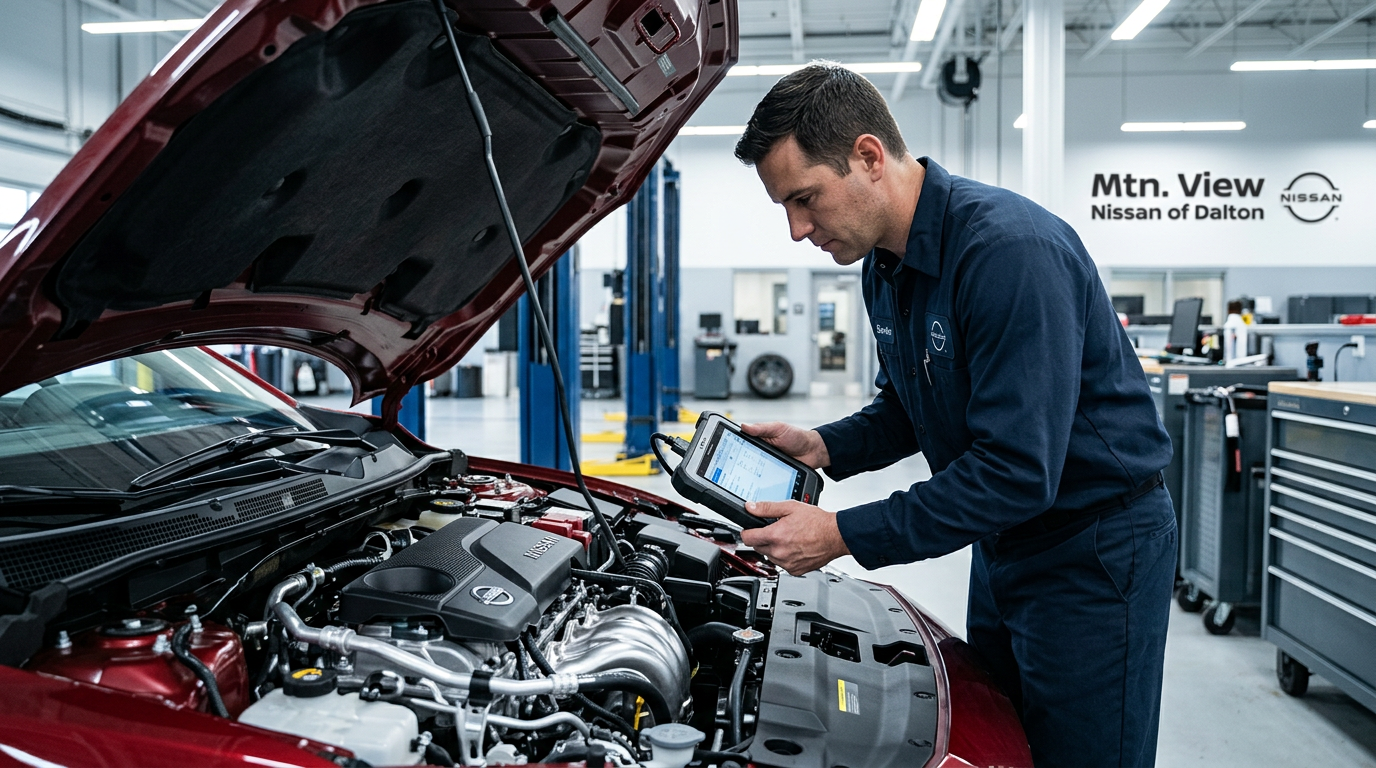
All qualifying warranty repairs must be diagnosed and completed by factory-authorized technicians using Genuine Nissan Parts. Warranty protection is designed specifically to address defects originating from vehicle manufacturing and assembly. This means components that fail prematurely under normal operating conditions—such as an electronic module failure, an alternator breakdown, a malfunctioning steering sensor, or an engine seal leak—receive full remedy including parts and labor.

When unexpected mechanical breakdowns happen on the road, factory warranty coverage is backed by factory roadside assistance for 36 months or 36,000 miles. If you experience a sudden mechanical issue, flat tire, or dead battery, call Nissan Roadside Assistance: 1-800-225-2476 to coordinate transport directly to an authorized service facility. For local drivers navigating the varied elevations of the Ridge and Valley terrain around Dalton, having reliable factory backing ensures that sudden component failures are resolved without unexpected out-of-pocket expenses.

To initiate a warranty assessment or ask a coverage question, you can contact our service staff by phone at (706) 459-3600 or plan your route to our Dalton service location for a complete diagnostic evaluation.

Table of Contents

What Items Are Typically Excluded From the 36-Month Nissan Bumper-to-Bumper Warranty?

Consumable maintenance components, normal friction wear, environmental surface deterioration, and damage resulting from collision, misuse, or lack of required vehicle servicing are excluded from the 36-month limited warranty. Nissan’s new vehicle coverage specifically targets defects in workmanship rather than the predictable gradual wear that occurs as miles accumulate.

The following items are excluded under standard warranty guidelines:

  • Normal friction wear components, including brake pads, brake shoes, brake rotors, and manual clutch discs
  • Routine service items, such as engine air filters, cabin microfilters, wiper blade inserts, key fob batteries, and spark plugs
  • Scheduled fluid exchanges, including engine motor oil, transmission fluid, engine coolant, and brake fluid
  • Tire damage, tread wear, and road hazard punctures (which are supported under separate tire manufacturer warranties)
  • Wheel alignment, tire balancing, and suspension adjustments unless required as part of an authorized warranty repair
  • Cosmetic body damage, glass chips, paint scratches, and rust resulting from stone impacts, road salt, industrial fallout, or acid rain
  • Failures or accelerated wear resulting from operating the vehicle without proper fluid levels or ignoring recommended maintenance schedules

Our service advisors regularly explain to vehicle owners that the underlying cause of component failure determines coverage. For instance, replacing brake pads that have worn down over 30,000 miles of driving is regular maintenance paid by the owner. Conversely, if an internal brake caliper piston seizes prematurely due to a manufacturing defect and ruins the assembly at low mileage, that failure falls under factory warranty repair.

Does the Nissan Powertrain Warranty Cover Xtronic CVT Transmission Replacements?

Complete transmission assembly replacements and internal repairs for the Xtronic CVT are fully covered under the 5-year or 60,000-mile limited powertrain warranty if the failure results from a defect in factory materials or assembly. This factory powertrain protection covers the complete CVT assembly, torque converter, electronic transmission control units, internal pulleys, steel belts, and internal oil pump.

Powertrain coverage extends across major mechanical assemblies that propel the vehicle:

  • Engine assembly: Cylinder block, cylinder head, all internal lubricated parts, timing chain, timing gears, valve train, oil pump, water pump, intake and exhaust manifolds, and engine mounts.
  • Transmission and transaxle: Xtronic CVT internal components, automatic transmission torque converter, transfer case assemblies, transmission control modules, and internal seals and gaskets.
  • Drivetrain components: Final drive housings, propeller shafts, universal joints, front and rear axle shafts, constant velocity joints, and hub bearings.
  • Restraint systems: Factory airbags and related electronic sensor components.

To maintain coverage integrity on your transmission, follow the recommended service intervals outlined in the Owner's Manual. Using non-approved aftermarket transmission fluids can compromise the hydraulic pressure necessary for the variable pulleys and may jeopardize warranty eligibility. If replacement components or factory-approved maintenance items are needed, our certified technicians source everything directly through our Nissan parts department to ensure full factory compatibility and warranty protection.

Does Nissan Repair or Replace Degraded EV Batteries Under Warranty?

Nissan covers electric vehicle lithium-ion battery capacity loss below nine bars on the vehicle's onboard capacity gauge for 8 years or 100,000 miles, retaining the right to repair individual cell modules, install a factory-reconditioned pack, or replace the complete battery assembly. In addition to capacity coverage, the warranty guards against defects in materials and workmanship across the entire high-voltage traction pack and thermal management system for that same duration.

The instrument cluster in Nissan electric vehicles includes a multi-segment battery capacity meter that monitors long-term pack health. If the battery capacity drops to eight bars or fewer within the coverage window, the vehicle qualifies for warranty remediation. Nissan factory engineers evaluate each claim to determine the appropriate remedy. Depending on pack diagnostics, the repair may involve:

  1. Testing and replacing individual degraded battery modules to bring total pack balance back above the nine-bar threshold.
  2. Installing an authorized remanufactured traction battery pack assembled to strict factory tolerances.
  3. Installing a completely new factory battery assembly if individual module replacement cannot restore required energy storage parameters.

Routine software updates and annual battery health inspections keep the energy management system operating efficiently. If your dashboard indicates abnormal range reduction, charging faults, or a drop in the capacity meter reading, you can schedule a service appointment online with our certified electric vehicle technicians for high-voltage diagnostic testing.

How Does Nissan Warranty Coverage Compare to Hyundai and Kia?

Hyundai and Kia provide a 5-year/60,000-mile basic warranty and a 10-year/100,000-mile powertrain warranty, delivering longer factory timeframes than Nissan's standard 3-year/36,000-mile basic and 5-year/60,000-mile powertrain limits. However, Nissan vehicles match or exceed rival coverage parameters when paired with factory-backed extended service contracts, while offering distinct transferability advantages on the secondary market.

Coverage Category Nissan Factory Warranty Hyundai / Kia Factory Warranty
Basic Limited Coverage 3 years / 36,000 miles 5 years / 60,000 miles
Powertrain (Original Owner) 5 years / 60,000 miles 10 years / 100,000 miles
Powertrain (Subsequent Owners) 5 years / 60,000 miles (fully transferable) Reduced to 5 years / 60,000 miles
Corrosion Perforation 60 months / unlimited miles 7 years / unlimited miles
Roadside Assistance 36 months / 36,000 miles 5 years / 60,000 miles

The 10-year powertrain warranty offered by Hyundai and Kia applies solely to the original retail buyer. When those vehicles are sold to a second owner, the powertrain coverage automatically drops to a 5-year or 60,000-mile limit calculated from the original in-service date. In contrast, Nissan's factory powertrain coverage remains fully transferable to subsequent owners for the entirety of its 5-year or 60,000-mile term without administrative reductions. Drivers seeking longer terms can also bridge any gap by choosing a factory-backed Nissan Security+Plus agreement, which extends mechanical protection up to 8 years or 120,000 miles.

Do Independent Repair Shops Accept Nissan Security+Plus Extended Protection Plans?

Independent repair facilities generally cannot bill claims directly through Nissan Security+Plus extended service plans, as these programs are structured for direct administration through authorized Nissan dealerships. While Nissan allows out-of-network repairs under specific emergency conditions, the independent shop or vehicle owner must obtain formal prior authorization from the plan administrator before any mechanical teardown or repair begins.

Opting for service at an authorized dealership offers operational advantages over third-party facilities:

  • Direct billing between the dealership and Nissan Extended Services North America, eliminating the need for owners to pay large repair bills out of pocket while waiting for reimbursement.
  • Diagnostics performed with proprietary CONSULT software that accurately reads factory diagnostic trouble codes and module calibrations.
  • Repairs completed exclusively with Genuine Nissan Parts engineered specifically to factory tolerances.
  • Certified technicians who complete continuous factory training on Nissan powertrains and electrical architectures.

In Dalton, where heavy manufacturing and industrial logistics keep commuters on the road every day, unexpected downtime can disrupt demanding work schedules. Relying on an authorized dealer avoids the common pitfalls of independent repair authorization, such as delayed claims processing, unapproved labor rate caps, and non-OEM part disputes.

Are Nissan Recall Repairs Free of Charge at Dealerships?

All safety, emissions, and service campaign recall repairs authorized by Nissan and the National Highway Traffic Safety Administration are completed entirely free of charge at authorized dealerships. Federal regulations mandate that safety defects and non-compliance issues be resolved at zero cost to the vehicle owner, covering all necessary replacement components and technician labor.

Recall coverage applies regardless of the vehicle's current age, accumulated mileage, or warranty expiration status. You qualify for complimentary recall repairs whether you purchased your Nissan brand new, bought it as a certified pre-owned model, or acquired it through a private-party used sale.

Our service department can check your vehicle's status instantly using your 17-digit Vehicle Identification Number. When a recall requires parts replacement—such as a passenger airbag inflator, an anti-lock brake module update, or a fuel pump assembly—our technicians install updated, factory-engineered hardware to restore your vehicle to factory safety standards.

Common Questions About Nissan Warranty and Protection Coverage

Q: Does my Nissan warranty remain valid if I perform routine oil changes myself?

Completing your own routine oil changes and filter replacements does not void your Nissan factory warranty, provided the service uses correct fluid viscosities and meets factory intervals. You must retain all dated receipts for purchased oil and filters and log the exact mileage and date of each service. If an engine lubricated component experiences a mechanical failure during the warranty period, our advisors may request those maintenance records to demonstrate that proper lubrication standards were maintained.

Q: How do technicians determine if a repair requires corporate prior authorization?

Standard mechanical repairs rarely require corporate pre-approval, but major assemblies like complete engine replacements, Xtronic CVT replacements, and high-voltage battery repairs require technicians to submit diagnostic data to corporate engineers first. Our service team transmits electronic scan tool logs and oil sample data directly through the factory network. Nissan reviews and approves the submission before component disassembly begins, ensuring your warranty coverage applies without delay.

Q: Can I transfer my Nissan Security+Plus extended service plan if I sell my car?

Nissan Security+Plus vehicle service contracts can be transferred to a subsequent private buyer if you sell the vehicle before the plan expires. To complete the transfer, submit the transfer form along with the required administrative transfer fee and proof of ownership transfer within the timeframe specified in your contract terms. Transferring factory-backed coverage provides documented maintenance and protection that increases buyer confidence and resale value.

Q: Will installing an aftermarket suspension lift or leveling kit void my factory warranty?

Installing aftermarket suspension equipment does not automatically void your entire vehicle warranty, but damages directly caused by those non-factory parts are excluded from coverage. For example, if an aftermarket suspension kit causes premature wear to constant velocity axle boots, steering rack bushings, or wheel bearings, repairs to those affected parts are not covered. Unrelated systems—such as your air conditioning compressor or infotainment screen—remain fully covered under standard terms.

Q: What documentation should I bring when checking in for a warranty repair?

Bring your state driver's license, current vehicle registration, and any relevant service records if your concern involves lubricated powertrain components. If your vehicle has an active extended contract such as Nissan Security+Plus, bring your agreement card or policy number. Having these items accessible allows our service advisors to verify your vehicle details and process the diagnostic repair order efficiently.

How Do I Schedule a Warranty Service Appointment at Mountain View Nissan of Dalton?

Scheduling a factory warranty diagnostic appointment at Mountain View Nissan of Dalton is simple through our online service scheduling tool or by speaking directly with our service desk at (706) 459-3600. When arranging your visit, have your 17-digit Vehicle Identification Number and an accurate description of the symptoms ready so our certified technicians can prepare appropriate diagnostic equipment in advance.

Our factory-authorized service center is open Monday through Friday from 7:30 a.m. to 6:00 p.m., and Saturday from 8:00 a.m. to 4:00 p.m., offering convenient appointment windows for busy work schedules. Whether you are addressing an active warning light, an unusual transmission noise, or an open safety recall, our team delivers certified service using authentic factory diagnostic protocols.

For drivers heading in from central Dalton or along the commercial East Walnut Avenue corridor, set your GPS directly to our dealership facility at 1706 E Walnut Ave, Dalton, GA 30721. Contact our service advisors today to confirm your coverage details and reserve your dedicated diagnostic bay.


© 2026 Mtn View Nissan of Dalton. All rights reserved.
Posted in:

Related Posts

Does Nissan Factory Warranty Cover Routine Maintenance

Does Nissan Factory Warranty Cover Routine Maintenance?

Standard new-vehicle warranties from Nissan do not cover routine factory scheduled maintenance such as oil changes, tire rotations, brake pad replacements, or fluid flushes. The 3-year/36,000-mile bumper-to-bumper limited warranty and 5-year/60,000-mile powertrain limited warranty cover repairs resulting from defects in factory materials or mechanical workmanship. Vehicle owners pay out of pocket for routine wear items and scheduled servicing, though staying current on maintenance is required to keep your factory warranty active and avoid claim denials caused by neglect. Maintaining complete service records is essential for preserving warranty protections throughout your ownership. If a major component like an engine, transmission, or differential requires covered warranty repairs, service technicians must confirm that the vehicle received appropriate maintenance according to manufacturer schedules. Failing to change engine oil or ignoring severe fluid degradation can invalidate coverage for related failure components. Bringing your vehicle to an authorized service facility ensures that every inspection, oil change, and filter replacement is documented in official service records. You can visit our service center location or call (706) 459-3600 to verify your vehicle's maintenance schedule or check for open warranty updates. Table of Contents How Much Does Annual Nissan Factory Scheduled Maintenance Typically Cost? How Often Does Your Nissan Require Factory Scheduled Maintenance? How Are Nissan Safety Shield 360 Sensors Calibrated During Repairs? Where to Find Official Nissan Service and Express Maintenance in Dalton Common Questions About Nissan Service and Warranty Coverage Keep Your Nissan Running Smoothly with Mtn View Nissan Service How Much Does Annual Nissan Factory Scheduled Maintenance Typically Cost? Annual Nissan factory scheduled maintenance averages between $350 and $600 per year for routine services during the first several years of ownership. Overall annual upkeep costs vary depending on vehicle model, total annual mileage, and specific maintenance milestone requirements, with baseline routine service visits required roughly every six months. Maintenance expenses fluctuate depending on whether your vehicle requires simple maintenance or comprehensive major milestone service. Basic visits focus on engine oil changes, tire rotations, and multi-point safety inspections, keeping ongoing costs modest. Specific component replacement milestones occur at higher mileage thresholds: Engine air filter replacement is scheduled every 30,000 miles or 24 months. Brake fluid replacement is scheduled every 30,000 miles or 24 months under standard conditions, or every 10,000 miles or 12 months under severe driving conditions. Spark plug replacement is required every 105,000 miles or 84 months. According to industry data from RepairPal's vehicle reliability ratings, Nissan maintains a 4.0 out of 5.0 reliability score, ranking 9th out of 32 total car brands. Nissan vehicles average roughly 0.3 unscheduled repair shop visits per year, with a 13 percent probability of a repair being severe, helping keep overall long-term maintenance predictable. How Often Does Your Nissan Require Factory Scheduled Maintenance? Most Nissan vehicles require factory scheduled maintenance every 7,500 miles or 6 months under standard driving conditions, while vehicles operated under severe driving conditions require service every 5,000 miles or 6 months. Adhering to these intervals keeps vital powertrain components properly lubricated, prevents uneven tire wear, and ensures safety systems function reliably. Driving habits directly impact your maintenance schedule. Daily stop-and-go commuting to manufacturing facilities and navigating hilly Ridge and Valley terrain around Dalton frequently qualifies a vehicle for severe condition service intervals. Severe conditions include driving short distances in cold weather, extensive idling, towing, or driving on dusty back roads. Key service milestone intervals under standard operating schedules include: 7,500 Miles or 6 Months: Tire rotation, engine oil and filter service, and multi-point vehicle inspection. 15,000 Miles or 12 Months: Brake pad and rotor inspection, drive-shaft boot inspection on 4WD models, and transfer-case oil inspection on 4WD models. 30,000 Miles or 24 Months: Engine air filter replacement, complete brake fluid flush, and active safety system sensor check. 105,000 Miles or 84 Months: Spark plug replacement and long-life engine coolant inspection. For 4WD trucks like the Nissan Frontier operating under severe conditions, technicians inspect drive-shaft boots every 5,000 miles or 6 months and replace transfer-case oil every 20,000 miles or 24 months to prevent drivetrain damage. How Are Nissan Safety Shield 360 Sensors Calibrated During Repairs? Factory-trained technicians calibrate Nissan Safety Shield 360 sensors using specialized aiming targets, precision laser alignment frames, and CONSULT diagnostic software to align radar, sonar, and optical camera modules with exact vehicle centerlines. Sensor calibration is mandatory after major maintenance or repairs, including windshield replacement, wheel alignment, front-end body repairs, or suspension adjustments. NISSAN SAFETY SHIELD 360 CALIBRATION Service Trigger Sensors Requiring Calibration Windshield Replacement Forward Optical Camera Wheel Alignment / Suspension Work Radar & Steering Angle Sensor Front Bumper / Grille Repair Front Radar & Sonar Sensors Rear Bumper / Quarter Panel Repair Blind Spot Rear Sonar Modules Modern driver-assist technology relies on camera and radar modules mounted behind the windshield, front grille, and rear bumpers. If a sensor shifts by even a fraction of a degree due to body repairs or physical impacts, systems such as Automatic Emergency Braking, Lane Departure Warning, and Blind Spot Warning can deliver inaccurate alerts or fail to engage correctly. During the calibration procedure, technicians position high-precision physical targets at exact measured distances around the vehicle. Using CONSULT diagnostic software, technicians interface directly with the onboard computer to re-zero sensor angles and verify real-time tracking accuracy. Installing factory components sourced through our genuine Nissan parts department ensures optical cameras and radar modules integrate seamlessly with factory brackets and mounting hardware. Where to Find Official Nissan Service and Express Maintenance in Dalton Official factory scheduled maintenance and certified repair service for Nissan vehicles is available at Mtn View Nissan of Dalton, located at 1706 E Walnut Ave. Our factory-certified service center is equipped with high-tech diagnostic bays, specialized tools, and technicians trained specifically on Nissan systems. For vehicle owners who need rapid maintenance without setting aside an entire afternoon, Nissan Express Service offers rapid care with no appointment necessary. Drivers can stop in for routine services, including: Engine oil and filter changes Tire rotation and air pressure checks Battery health diagnostics and replacements Cabin and engine air filter replacements Complimentary multi-point safety inspections The service department operates Monday through Friday from 7:30 AM to 6:00 PM and Saturday from 8:00 AM to 4:00 PM. Customers enjoy amenities including complimentary Wi-Fi, a clean and comfortable waiting lounge, local shuttle service, and a complimentary car wash with eligible services. Vehicle owners can also save on care by utilizing rotating service specials, parts coupons, and earning points through the Nissan One-to-One Rewards program. You can easily schedule a service appointment online to reserve a time that fits your schedule. Common Questions About Nissan Service and Warranty Coverage Q: Does Nissan factory scheduled maintenance need to be done at an authorized dealership to keep the warranty valid? Routine maintenance can legally be performed at qualified independent service facilities without automatically voiding your factory warranty. However, servicing your vehicle at an authorized dealer guarantees that factory-trained technicians perform the work using genuine OEM parts. Furthermore, dealer service visits automatically log detailed records directly into Nissan's national database, eliminating paperwork hassles if you ever need to submit a factory warranty claim. Q: What qualifies as severe driving conditions for Nissan maintenance schedules? Nissan defines severe driving conditions as operating in dusty, muddy, or salt-treated road environments, towing a trailer, driving extensively with a car-top carrier, repeated short trips under 5 miles in cold weather, or prolonged idle time in heavy traffic. Vehicles operated under these conditions require shortened maintenance intervals, such as oil changes and tire rotations every 5,000 miles rather than 7,500 miles. Q: Are safety recall repairs and software updates covered for free on Nissan vehicles? Yes, official safety recalls and service campaigns issued by Nissan are performed free of charge to vehicle owners at authorized service centers. Factory-trained technicians complete required component replacements, harness modifications, or ECU software updates using specialized diagnostic equipment regardless of whether your vehicle is still covered under the original new-vehicle warranty. Q: How long does a standard Nissan Express Service visit take? A standard Nissan Express Service visit for routine maintenance like an oil change, tire rotation, or air filter replacement is typically completed within one hour. Express lanes operate on a first-come, first-served basis without an advance appointment, providing fast service that includes a multi-point safety inspection of your brakes, battery, and tires. Q: What should you do if a dashboard indicator light or maintenance reminder appears? When a maintenance reminder or check engine light illuminates, you should schedule a diagnostic scan at an authorized service department as soon as possible. Technicians use specialized diagnostic equipment to read fault codes stored in system control modules, pinpointing sensor malfunctions or mechanical issues before minor problems turn into costly repairs. Keep Your Nissan Running Smoothly with Mtn View Nissan Service Following factory scheduled maintenance intervals is the single most effective step you can take to preserve vehicle performance, protect advanced driver-assist systems, and maintain resale value over time. Whether your vehicle requires routine oil service, a brake inspection, or advanced sensor calibration, expert care ensures your car, truck, or SUV operates at factory specifications. Plan your next maintenance visit by visiting our service center location or giving our team a call at (706) 459-3600 to speak directly with a service advisor. © 2026 Mtn View Nissan of Dalton. All rights reserved.
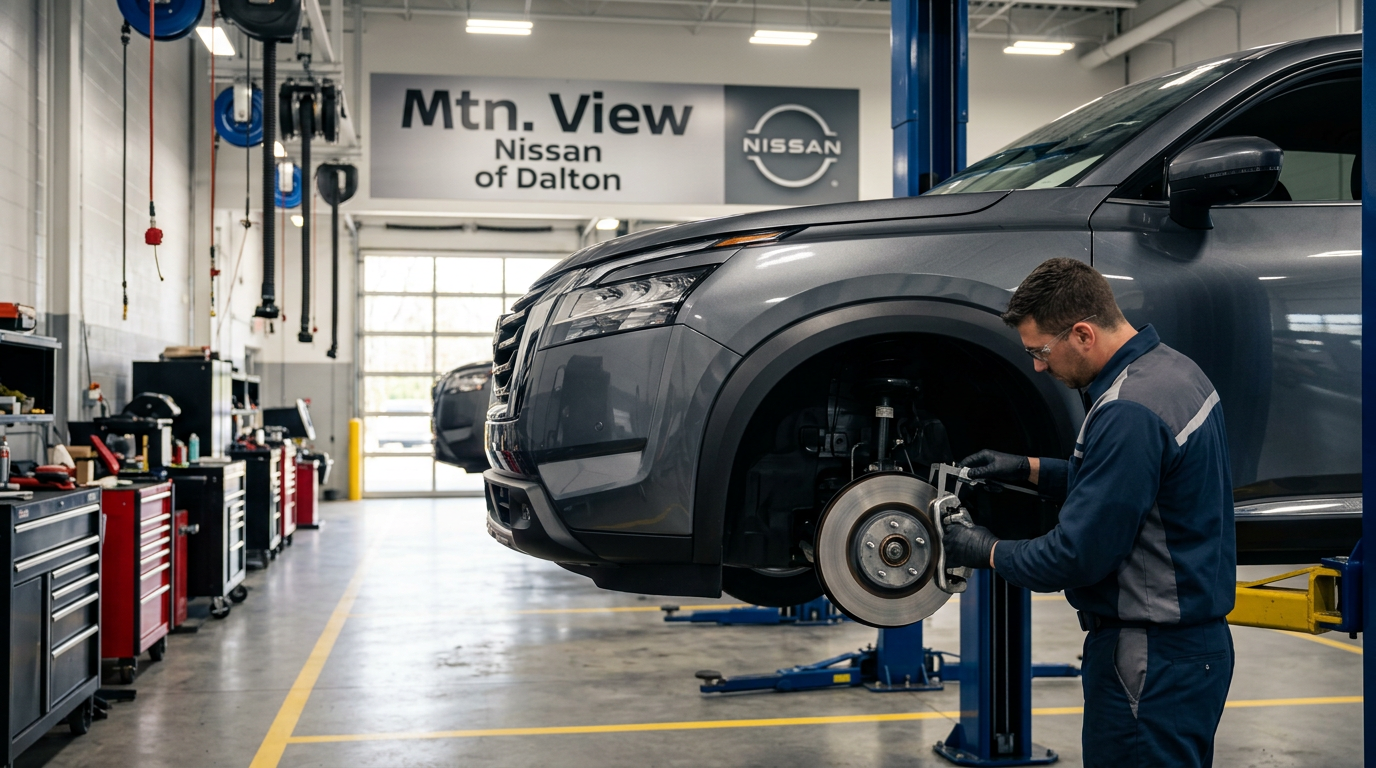
How Often Does a Nissan Pathfinder Need Brake Service

How Often Does a Nissan Pathfinder Need Brake Service?

A Nissan Pathfinder requires a comprehensive brake inspection every 5,000 miles or 6 months during routine oil change and tire rotation appointments, while brake pads typically require replacement between 30,000 and 70,000 miles. Brake fluid should be flushed every 20,000 miles or 24 months to maintain hydraulic system pressure and prevent internal corrosion. Drivers carrying full passenger loads or towing up to the maximum 6,000-pound towing capacity should inspect friction components more frequently to ensure optimal stopping capability. Stopping power on a three-row SUV carrying up to eight passengers relies on healthy friction surfaces and uncompromised hydraulic pressure. Daily stop-and-go commuting through local industrial corridors and school drop-off lines places recurring thermal load on the brake pads. During every routine service visit, certified technicians measure pad friction material thickness using precision digital calipers. Front brake pads start with approximately 10 to 12 millimeters of friction material; once wear reaches 3 millimeters, replacement is strongly recommended to prevent metal-to-metal contact with the rotors. Driving habits, payload weight, and local geography directly dictate how long brake friction components last. Operating a 4,400-pound SUV across hilly terrain generates substantial friction heat, which accelerates pad wear if downshifting isn't utilized during long descents. Families who regularly haul cargo or utilize their Pathfinder for trailering experience quicker pad thinning than those completing flat highway commutes. If you notice unusual squealing noises, vibration through the steering wheel, or an extended stopping distance, give our team (706) 459-3600 a quick call or visit our Dalton location for a thorough inspection before thin pad backing plates score your rotors. Table of Contents What Braking System and Rotor Specifications Does the Nissan Pathfinder Use? What Is Nissan ProPILOT Assist Brake Control Capability? How Often Should Nissan Pathfinder Brake Fluid Be Flushed? Are Brake Repairs Covered Under the Nissan Pathfinder Factory Warranty? Is Dealership Service Better Than an Independent Shop for Pathfinder Brakes? Common Questions About Nissan Pathfinder Brake Care Where Can You Get Nissan Pathfinder Brake Service and Repairs Near Dalton, GA? What Braking System and Rotor Specifications Does the Nissan Pathfinder Use? The 2026 Nissan Pathfinder uses a power-assisted four-wheel disc braking system with 13.78-by-1.18-inch front rotors and 12.99-by-0.63-inch rear rotors, controlled by standard four-wheel Anti-lock Braking System, Electronic Brake-force Distribution, and Brake Assist. In instrumented automotive road testing, this braking hardware brings the Pathfinder from 60 to 0 mph in approximately 122 feet, providing controllable stopping performance for a midsize crossover. The heavy-duty ventilated rotor design allows air to circulate between the inner and outer braking surfaces, rapidly dissipating heat accumulated during aggressive braking or mountain descents. The front dual-piston hydraulic calipers squeeze high-friction ceramic or semi-metallic brake pads evenly across the wide rotor face, ensuring linear pedal response. Standard Electronic Brake-force Distribution constantly monitors wheel speed, suspension load, and vehicle pitch, electronically routing braking pressure to the axle with the most traction. Emergency braking scenarios trigger additional mechanical and electronic safeguards built into the system chassis architecture: Brake Assist: Detects panic braking by monitoring the speed at which the brake pedal is depressed, automatically applying maximum hydraulic pressure before the driver's foot hits the floor. Four-Wheel ABS: Prevents wheel lockup on slick surfaces by pulsing brake pressure up to dozens of times per second, maintaining steering control during hard evasive maneuvers. Active Brake Limited Slip: Utilizes brake intervention on individual spinning wheels to transfer engine torque across the axle to wheels with firm traction. Navigating the moderately hilly terrain in the Ridge and Valley region around Dalton requires brake rotors that resist thermal warping. When hot brake pads clamp onto cold or heat-soaked rotors repeatedly, uneven material transfer can create microscopic surface variations. This condition leads to brake pulsation—a rhythmic vibration felt in the brake pedal or steering wheel when slowing down from highway speeds. Keeping rotors within manufacturer thickness tolerances ensures smooth torque absorption without premature pulsation. What Is Nissan ProPILOT Assist Brake Control Capability? Nissan ProPILOT Assist integrates adaptive cruise control with lane-centering assistance, utilizing electronic brake control actuators to modulate vehicle speed, maintain set following distances, and bring the SUV to a complete stop in heavy traffic. Working alongside standard safety features like Automatic Emergency Braking with Pedestrian Detection, Rear Automatic Braking, and Dynamic Brake Support, the system actively manages hydraulic pressure without driver pedal input. When driving in dense traffic, forward-facing radar and optical cameras scan the road ahead for slowing or stopped vehicles. If the vehicle ahead decelerates, the ProPILOT Assist module signals the electronic brake booster to meter precise brake pressure, slowing the vehicle smoothly. In stop-and-go conditions, the system can bring the Pathfinder to a full stop and hold it in place using the electronic parking brake system until traffic moves again. Advanced safety integration extends beyond highway cruising through the standard Safety Shield 360 technology suite: Automatic Emergency Braking with Pedestrian Detection: Monitors forward paths for vehicles and pedestrians, applying partial or full autonomous braking if a collision is imminent. Rear Automatic Braking: Detects stationary obstacles behind the SUV while reversing, automatically applying hard braking to avoid low-speed parking lot impacts. Dynamic Brake Support: Augments driver pedal pressure during sudden collision-avoidance maneuvers to minimize emergency stopping distances. Because driver-assist technologies rely heavily on clean electrical signals, proper brake mechanical maintenance is essential. Worn pads, air in the brake lines, or warped rotors can degrade the smooth execution of automated stopping commands, causing harsh deceleration or system fault codes. Standard electronic stability systems, recognized in national crash-test evaluations like the IIHS TOP SAFETY PICK+ rating and NHTSA 5-Star Overall Safety Rating, depend on calibrated hydraulic responses to keep three-row family vehicles stable. How Often Should Nissan Pathfinder Brake Fluid Be Flushed? Nissan Pathfinder brake fluid should be flushed every 20,000 miles or 24 months under normal driving conditions to eliminate moisture accumulation and maintain high boiling points within the sealed hydraulic lines. Under severe operating conditions—such as frequent towing, mountain driving, or persistent stop-and-go traffic—replacing brake fluid as early as 10,000 miles or 12 months preserves hydraulic responsiveness and protects expensive system valves. Automotive brake fluid is glycol-based and inherently hygroscopic, meaning it continuously absorbs moisture from ambient air through flexible rubber hoses and reservoir seals over time. Even a tiny percentage of water contamination in DOT 3 brake fluid drastically lowers its boiling point. During hard braking, heat generated at the calipers transfers into the fluid; if contaminated fluid reaches its lowered boiling point, the water content vaporizes into steam pockets. Because vapor compresses while liquid does not, the driver experiences a soft, spongy brake pedal that sinks near the floorboard. Moisture in the hydraulic lines also triggers internal corrosion across polished metal components, including the master cylinder piston, anti-lock brake pump valves, and caliper slides. Over time, rust particles and microscopic rubber debris contaminate the fluid, turning it from a clear amber color to dark brown or black. A complete fluid flush vacuums out degraded fluid from every caliper bleeder screw, replacing it with fresh fluid to keep internal seals soft and valve passages clear. Are Brake Repairs Covered Under the Nissan Pathfinder Factory Warranty? Brake pads, shoe linings, and brake rotors are classified as normal wear-and-tear friction items and are excluded from coverage under the 3-year/36,000-mile limited warranty and 5-year/60,000-mile powertrain warranty, unless failure stems directly from a defect in materials or factory workmanship. Non-friction mechanical components—such as the master cylinder, brake booster, ABS hydraulic control unit, and brake lines—are covered against defect-related failures during the basic warranty period. If a caliper piston sticks due to a manufacturing flaw or a master cylinder seal leaks prematurely within 3 years or 36,000 miles, repairs are completed at zero cost to the owner using original equipment components. However, routine pad thinning resulting from mileage, city stop-and-go driving, or towing is the owner's responsibility. When replacing worn friction components, maintaining factory specifications ensures proper performance with integrated driver-assist systems. OEM brake pads feature exact-fit backing plates, factory shim packs, and friction formulations engineered specifically for the Pathfinder's vehicle curb weight and rotor metallurgy. Sourcing components through our parts department guarantees factory-certified fitment, reducing brake dust and eliminating squeaking associated with generic aftermarket alternatives. Is Dealership Service Better Than an Independent Shop for Pathfinder Brakes? While independent repair shops may offer slightly lower labor rates, dealership service provides factory-trained technicians, specialized diagnostic equipment, and genuine factory parts engineered specifically for your three-row SUV. Independent facilities often install one-size-fits-all aftermarket brake pads that can cause unwanted noise, high dust accumulation, or accelerated rotor wear on heavy vehicles. Modern Nissan braking systems involve far more than simple mechanical pad replacement. Features like electronic parking brakes, active brake limited slip, and emergency braking systems require electronic calibration during routine maintenance. Dealership technicians utilize proprietary diagnostic tools to retract electronic parking brake actuators safely into service mode, preventing costly damage to internal caliper motors during pad installation. Comparing service approaches highlights key differences between independent facilities and authorized service centers: Diagnostic Technology: Dealerships connect directly to factory network tools to scan for ABS module software updates, recalibrate sensor offsets, and clear stored fault codes. Component Quality: Dealerships install original equipment pads with custom chamfers and multi-layer shims designed specifically to eliminate cold-weather brake squeal. Warranty Preservation: Official service records at an authorized dealer provide seamless documentation if warranty questions arise regarding related powertrain or safety systems. Technicians who work on Nissan vehicles every day understand exact factory service procedures, torque values, and slide pin lubrication requirements. Correctly lubricating caliper carrier slides with high-temperature silicone grease prevents pad binding, ensuring even wear across both inner and outer friction pads over thousands of miles. Common Questions About Nissan Pathfinder Brake Care Q: What are the primary warning signs that a Nissan Pathfinder needs new brake pads? Key indicators include a high-pitched metallic squealing noise when stopping, a grinding sound during hard pedal pressure, a spongy or soft brake pedal, steering wheel pulsation under deceleration, and increased stopping distances. The high-pitched squeal is created by a built-in mechanical wear indicator contacting the rotor, alerting you that friction material has thinned to critical levels before rotor damage occurs. Q: Does heavy towing with a Pathfinder accelerate brake wear? Towing trailers up to the maximum 6,000-pound towing capacity adds significant kinetic energy that the braking system must convert into thermal energy. This increased heat accelerates pad wear and brake fluid degradation. Pathfinder owners who tow regularly or haul heavy passenger loads should inspect brake pads every 5,000 miles and consider flushing brake fluid annually to prevent fluid boiling on steep highway grades. Q: Why does the brake pedal feel soft or spongy on a three-row SUV? A soft pedal feel usually indicates air bubbles trapped in the hydraulic brake lines, water contamination in the brake fluid, or worn flexible rubber brake hoses expanding under hydraulic pressure. Air and steam compress when the pedal is pressed, absorbing pedal force instead of transferring it to the caliper pistons. A complete brake fluid flush bleeds air and moisture from the lines, restoring firm pedal resistance. Q: Should brake rotors be resurfaced or completely replaced during a brake job? Rotors should be replaced if their thickness measures below the minimum discard specification stamped on the rotor casting, or if deep scoring, heat cracks, or heavy rust lip formation is present. While smooth rotors with adequate thickness can sometimes be resurfaced on a precision brake lathe, replacing rotors along with new pads ensures optimal bedding, maximum heat absorption, and quieter operation. Q: How do ceramic and semi-metallic brake pads compare on a Pathfinder? Ceramic brake pads produce minimal dark dust and operate silently during daily city driving, making them ideal for commuting and family errands. Semi-metallic brake pads offer higher thermal conductivity and stronger cold-bite friction, making them suitable for heavy towing or severe driving conditions, though they generate slightly more visible dust on aluminum wheels. Where Can You Get Nissan Pathfinder Brake Service and Repairs Near Dalton, GA? For expert Nissan Pathfinder brake inspections, rotor resurfacing, fluid flushes, and pad replacements near Dalton, trust the factory-certified service center at Mtn View Nissan of Dalton. Our team uses specialized factory diagnostic tools and genuine Nissan parts to ensure your three-row SUV maintains its stopping performance and advanced driver-assist functionality across every commute. Local drivers operating daily along the manufacturing corridors and rolling hills around Dalton demand reliable stopping power in all traffic conditions. Whether you need a quick 5,000-mile brake pad wear check during a routine oil change or a full four-wheel rotor and caliper service, our certified technicians complete every job according to strict factory specifications. We verify rotor thickness, inspect hydraulic lines, top off fluid reservoirs, and reset electronic brake systems to keep your family safe on the road. Taking care of your Pathfinder's braking system is straightforward with flexible service options: Schedule Ahead: Easily reserve your appointment online to pick a time slot that matches your busy family schedule. Speak with Advisors: Call our knowledgeable service desk to discuss current maintenance needs, wear symptoms, or service specials. Visit Our Location: Conveniently located on East Walnut Avenue, our facility offers a comfortable waiting area while your vehicle is serviced. Ready to restore factory pedal feel and braking confidence to your SUV? You can schedule a service appointment online today, give our service team (706) 459-3600 a call, or drive straight to our service bay at 1706 E Walnut Ave, Dalton, GA 30721 for a professional multi-point brake inspection. © 2026 Mtn View Nissan of Dalton. All rights reserved.

How Do You Choose Replacement Tires for a 2026 Nissan Frontier

How Do You Choose Replacement Tires for a 2026 Nissan Frontier?

Choosing replacement tires for a 2026 Nissan Frontier requires matching your trim's wheel diameter with a tire engineered for your driving habits, load requirements, and typical road conditions. Standard configurations take either P265/70R16, P265/65R17, or P265/70R17 sizes, offering a balance between pavement comfort and trail capability. Selecting the correct replacement involves verifying load index ratings to maintain your truck's 7,150-pound maximum towing capacity while preserving proper speedometer calibration. Selecting the right tire setup begins with evaluating how you use your mid-size truck. Daily highway commuting on pavement demands different tread compounds than navigating unpaved job sites or muddy access roads. Selecting a set designed for paved efficiency delivers a quiet cabin, long tread life, and maximum fuel economy from the 3.8-liter V6 engine. Conversely, equipping an all-terrain tire increases off-road bite and puncture resistance along the sidewalls, though it may slightly reduce overall fuel efficiency. Matching factory specifications ensures that critical vehicle systems—including anti-lock braking, electronic stability control, and the 9-speed automatic transmission shift mapping—function exactly as engineered. Changing overall tire diameter without adjusting mechanical parameters alters rolling circumference, which causes speed sensor miscalculations. When you are ready to inspect your tread depth or evaluate replacement options, our team at Mtn View Nissan of Dalton can verify your exact door-jamb placard requirements. You can reach our technicians directly at (706) 459-3600 or visit our service facility at 1706 E Walnut Ave for a comprehensive tire health check. Drivers hauling heavy cargo around industrial facilities in Dalton rely on correct load-range ratings to prevent uneven tread wear and maintain vehicle stability under heavy payload demands. Table of Contents What Factory Tire Sizes, Bolt Patterns, and Pressures Are Specified Across 2026 Nissan Frontier Trims? How Do Rugged Terrain (R/T) and All-Terrain (A/T) Tires Compare for Ride Comfort and Highway Noise? Which Tire Tread Pattern Delivers Superior Wet Traction on Rainy Highways Around Dalton? Can You Fit 33-Inch Tires on a Stock 2026 Nissan Frontier Without a Lift Kit? How Much Does Replacement Tire Service Cost Including Taxes and Recycling Fees? Frequently Asked Questions About 2026 Nissan Frontier Tire Maintenance and Care Essential Next Steps for 2026 Nissan Frontier Tire Service What Factory Tire Sizes, Bolt Patterns, and Pressures Are Specified Across 2026 Nissan Frontier Trims? Factory tire sizing for the 2026 Nissan Frontier varies across trim levels, ranging from 16-inch base setups to 17-inch all-terrain configurations and 18-inch highway wheels. The entry S trim comes standard with P265/70R16 all-season tires mounted on 16-inch aluminum-alloy wheels. Upgrading to the SV trim transitions the vehicle to P265/65R17 all-season rubber on 17-inch alloy wheels, while top-tier SL trims feature 265/60R18 tires designed for highway stability and refined ride quality. Off-road focused models, including the PRO-X and PRO-4X, utilize P265/70R17 all-terrain tires wrapped around 17-inch PRO aluminum-alloy wheels. This specific sizing provides an expanded sidewall profile that absorbs severe trail impacts and improves ground clearance on uneven terrain. Regardless of the trim level, all 2026 Frontier models share a 6x114.3 mm (6x4.5 inches) bolt pattern, a 66.1 mm center bore diameter, and a factory wheel offset of approximately +30 mm. Matching these exact hub dimensions is critical when buying aftermarket wheels to ensure proper brake caliper clearance and prevent wheel bearing strain. Trim Level Factory Wheel Size OEM Tire Sizing Standard Tire Type Recommended Pressure Crew Cab S 16" x 7.0" Alloy P265/70R16 All-Season 35 PSI Crew Cab SV 17" x 7.5" Alloy P265/65R17 All-Season 35 PSI PRO-X & PRO-4X 17" x 7.5" PRO Alloy P265/70R17 All-Terrain 35 PSI SL & Upper Trims 18" x 7.5" Alloy 265/60R18 Highway Terrain 35 PSI Maintaining the factory-recommended cold tire pressure of 35 PSI preserves fuel economy ratings and ensures even tread wear across the footprint. Nissan equips every 2026 Frontier with a tire pressure monitoring system featuring Easy-Fill Tire Alert, which signals with a horn beep when you reach the correct inflation pressure during servicing. How Do Rugged Terrain (R/T) and All-Terrain (A/T) Tires Compare for Ride Comfort and Highway Noise? All-terrain (A/T) tires deliver superior highway ride comfort and lower cabin noise compared to rugged terrain (R/T) tires, making A/T rubber the practical choice for drivers who split time between daily commuting and light off-roading. R/T tires incorporate wider tread voids and aggressive shoulder blocks derived from mud-terrain designs, which generate distinct acoustic hum at speeds above 65 mph. A/T designs utilize computer-optimized pitch sequencing that disrupts sound waves before they reach the truck cabin. When truck owners come into our service center comparing replacement options, they often ask whether aggressive all-terrain treads will create noticeable cabin drone at 65 mph on the highway. Modern A/T tires engineered for mid-size trucks use variable block sizing and angled siping to keep road noise nearly identical to traditional passenger highway tires. In contrast, R/T tires feature deeper tread channels and reinforced rubber compounds that create minor micro-vibrations through the steering column when traveling over smooth asphalt. The trade-off centers on severe-terrain capability versus daily refinement. Rugged terrain options excel at shedding thick mud, resisting sharp rock punctures, and gripping loose shale on steep trail inclines. However, the stiffer carcass construction required for those off-road benefits translates to a firmer ride over expansion joints and highway pothole impacts. For truck owners using their vehicle predominantly on paved roads, an A/T tread provides ample trail traction without sacrificing long-distance driving comfort. Which Tire Tread Pattern Delivers Superior Wet Traction on Rainy Highways Around Dalton? Highway Terrain (H/T) and specialized all-season tires with deep circumferential grooves deliver superior wet traction on rain-slicked paved roads compared to blocky off-road treads. Tread patterns designed specifically for wet highways feature continuous longitudinal channels that rapidly evacuate water from beneath the contact patch. This hydraulic clearing action prevents hydroplaning by maintaining direct rubber-to-asphalt contact during heavy downpours. All-terrain tires perform adequately in light rain, but their blocky, segmented tread voids do not clear standing water as efficiently at highway speeds. Aggressive off-road tires lack the dense zigzag siping—tiny slots cut across the tread blocks—that creates biting edges on slick surfaces. Hydroplaning resistance depends heavily on rubber contact area and water displacement speed, areas where all-season and H/T designs excel. The Ridge and Valley topography around Dalton features rolling hills, highway elevation changes, and sudden runoff during summer thunderstorms. Commuters traveling regional corridors face slick asphalt where oil residues mix with standing water. Choosing a replacement tire with an A-grade traction rating and multi-angle siping ensures maximum braking control and directional stability when navigating wet mountain highways. Can You Fit 33-Inch Tires on a Stock 2026 Nissan Frontier Without a Lift Kit? Installing 33-inch tires (such as 285/70R17 or 255/80R17 sizes) on a completely stock 2026 Nissan Frontier causes significant tire rubbing against the inner fender liners, front mud flaps, and outer plastic bumper edges during steering lock. The factory wheel wells are engineered to accommodate up to 31.6-inch overall outer tire diameters without clearance issues. Fitting 33-inch rubber cleanly requires a minimum 2-inch suspension leveling kit alongside selective plastic trimming inside the front wheel arch. Increasing overall tire diameter by nearly two inches impacts drivetrain dynamics beyond simple clearance constraints. The larger rolling radius alters the effective final drive ratio, causing the 3.8-liter V6 to hold gears longer under load and changing transmission shift points within the 9-speed automatic. Uncalibrated 33-inch setups also cause speedometer readouts to display lower speeds than actual vehicle velocity, while the added rotational mass increases stopping distances and reduces overall fuel economy. Tire Sizing Metric Factory PRO-4X Sizing Typical 33-Inch Upgrade Fitment Requirement Metric Designation 265/70R17 285/70R17 2-inch leveling kit needed Overall Diameter 31.6 inches 32.7 inches Trimming required Section Width 10.4 inches 11.2 inches Mud flap clearance check Revolutions Per Mile ~658 ~636 Speedometer recalibration required Truck owners planning a tire size upgrade must account for offset and backspacing changes. Utilizing original factory wheels with wider 33-inch tires can press the inner sidewall against the upper control arm during full suspension articulation. Maintaining suspension longevity requires pairing larger tires with appropriate wheel offsets or aftermarket control arms engineered to clear modified tire geometries. How Much Does Replacement Tire Service Cost Including Taxes and Recycling Fees? A full set of four replacement tires for the 2026 Nissan Frontier in Dalton typically ranges from $600 to $900 for standard all-season highway tires, while premium all-terrain options cost between $850 and $1,300 for the set. Total out-of-pocket expenses depend on tread aggressiveness, brand selection, load rating specifications, and professional installation services. Mounting, dynamic balancing, new valve stems, and tire disposal fees generally add $100 to $180 to the component cost. State regulations and local tax structures affect final invoice totals when purchasing tires in North Georgia. Georgia levies a mandatory $1.00 tire management fee per new replacement tire to support state environmental recycling programs. Additionally, tire purchases are subject to the standard state and Whitfield County combined sales tax rate of 7%. A complete breakdown of typical service expenses includes: Standard Highway All-Season Set: $600 – $900 Premium All-Terrain Set: $850 – $1,300 Professional Mounting & Balancing: $100 – $160 Georgia State Tire Management Fee: $4.00 ($1.00 per tire) Combined State & County Sales Tax: 7% of total invoice Wheel Alignment Service: $100 – $150 Investing in a four-wheel alignment during tire installation protects your tire purchase from rapid edge wear caused by misaligned camber or toe settings. Drivers operating in industrial areas around Dalton encounter pavement transitions and heavy transport traffic that gradually knock steering geometry out of spec. Requesting original equipment tire options or specialized tire service through our OEM Nissan parts order form ensures that your Frontier receives tires calibrated specifically for its suspension design and axle ratings. Frequently Asked Questions About 2026 Nissan Frontier Tire Maintenance and Care Q: What cold tire pressure should I keep in my 2026 Frontier tires? Maintain a cold inflation pressure of 35 PSI across all four standard factory tires, as specified on the driver's side door-jamb placard. Setting inflation levels when the tires have been stationary for at least three hours ensures accurate pressure readings. Correct inflation optimizes fuel economy, ensures even tread wear, and maintains proper load-carrying capacity for towing and hauling. Q: How often should I rotate the tires on my mid-size truck? Rotate your tires every 5,000 to 7,500 miles, or whenever you bring your truck in for scheduled oil maintenance. Regular rotations balance tread wear between the steer axle and drive axle, extending overall tire life. Trucks equipped with rear-wheel drive or part-time four-wheel drive wear rear tire treads faster due to acceleration torque, making consistent rotation patterns essential. Q: Will installing larger tires void my Nissan powertrain warranty? Installing larger tires does not automatically void your overall vehicle warranty, but damage directly caused by oversized tires will not be covered. Heavy rotational mass or aggressive fitments that cause component failure in wheel bearings, power steering systems, or suspension joints can invalidate warranty coverage for those specific parts. Sticking to approved tire sizes preserves full factory warranty protection. Q: Can I use the factory spare tire with modified all-terrain tires? Your spare tire should match the overall outer diameter of your primary tires to prevent drivetrain binding when four-wheel drive is engaged. Using a smaller full-size spare alongside larger aftermarket tires causes the mechanical differentials to rotate at different speeds, creating excessive heat and strain. If you upgrade to larger tires, replace your under-bed spare with an equivalent diameter tire. Q: How do I know when my all-terrain tires need replacement? Replace your tires when tread depth reaches 2/32 of an inch, indicated by built-in tread wear indicator bars running across the tire channels. However, all-terrain tires lose wet-weather grip and off-road traction once tread wears below 4/32 of an inch. Inspect your tires regularly for uneven shoulder wear, rubber cracking, sidewalls gouges, or persistent inflation loss. When you need professional tire inspection, replacement, or balancing, visit our Dalton location or call (706) 459-3600. You can also reserve an appointment directly through our online service scheduler. Essential Next Steps for 2026 Nissan Frontier Tire Service Maintaining proper tire health on your 2026 Frontier in Dalton is essential for preserving braking responsiveness, fuel efficiency, and towing performance. Whether your truck requires routine tread rotation, precise computerized wheel balancing, or a complete set of factory-matched replacement tires, staying proactive with service prevents premature wear on suspension components. Matching the exact tire specifications for your specific trim level ensures your truck continues to handle daily driving demands and heavy payloads reliably. Our factory-trained technicians at Mtn View Nissan of Dalton possess the specialized equipment and brand expertise needed to service every Frontier trim level correctly. We stock high-quality all-season and all-terrain tire options engineered to match Nissan factory load ratings and speed indices. Bring your truck to our service department for a complimentary tread depth check and pressure inspection today. © 2026 Mtn View Nissan of Dalton. All rights reserved.